So, you’ve decided to dive into the world of Valorant, huh? Get ready for some heart-pounding moments and nail-biting clutches! But let’s be honest, jumping into a tactical FPS like Valorant can feel a bit overwhelming at first.
I remember when I started, I felt like I was just running around like a headless chicken, feeding kills to the enemy team. Don’t worry; everyone starts somewhere.
This guide is your friendly companion, designed to help you navigate the initial hurdles and build a solid foundation for your Valorant journey. We’ll break down the basics and get you on the path to becoming a more confident and effective player.
Let’s take a closer look in the article below!
Alright, let’s get you started on your Valorant journey!
Understanding the Agents: Finding Your Perfect Fit
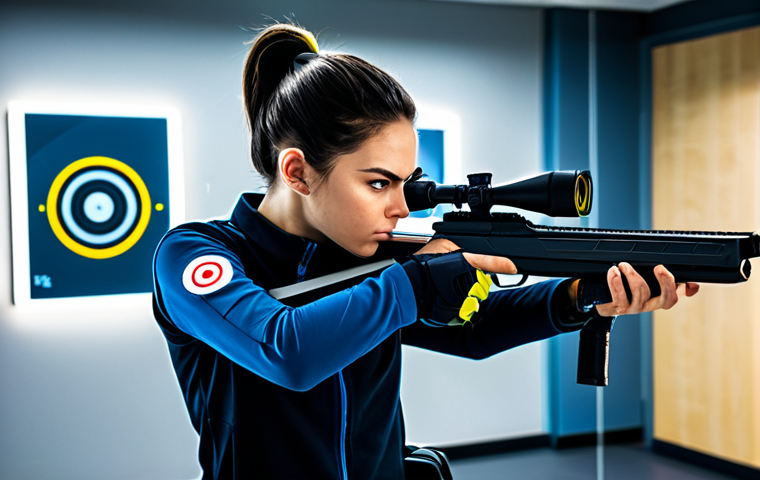
Choosing an Agent in Valorant is like picking your character class in an RPG – it significantly shapes your playstyle and role within the team. When I first started, I randomly picked agents based on who looked cool.
Big mistake! I quickly learned that each agent has a unique set of abilities that can be game-changers when used correctly. It’s about finding an agent that complements your natural playstyle and the team’s strategy.
Experiment with Different Roles
Valorant agents are broadly categorized into roles like Duelists, Initiators, Controllers, and Sentinels. Duelists are your aggressive entry fraggers, designed to take space and secure kills.
Initiators set up plays for their team with flashes, concussions, and recon abilities. Controllers shape the battlefield with smokes and area denial. Sentinels are the defensive backbone, locking down sites and providing intel.
Don’t be afraid to try out agents from different roles. You might discover you enjoy the strategic planning of a Controller more than the high-octane action of a Duelist.
Consider Your Play Style
Are you aggressive and like to be the first one through the door? A Duelist like Jett or Reyna might be a good fit. Do you prefer to play a more supportive role, setting up your teammates for success?
Initiators like Sova or Breach could be your calling. Are you a strategic thinker who enjoys controlling the flow of the game? Controllers like Brimstone or Omen might be perfect for you.
Or do you prefer to hold down the fort? Then, Sentinels like Cypher and Killjoy could be for you. It’s about finding an agent whose abilities resonate with how you naturally approach the game.
Practice Makes Perfect
Once you’ve found a few agents that pique your interest, spend some time in the practice range learning their abilities. Don’t just read about them; actually use them!
Experiment with different combinations and find out how they can be used in various situations. Watch pro players or streamers who specialize in your chosen agents and learn from their gameplay.
The more you understand your agent’s capabilities, the more effective you’ll be in real matches.
Mastering the Fundamentals: Aim, Movement, and Crosshair Placement
In Valorant, raw aiming skill isn’t everything. While having good aim is certainly important, it’s equally crucial to master the fundamentals of movement, crosshair placement, and understanding weapon recoil patterns.
Trust me, I’ve been outgunned by players with seemingly worse aim than me simply because they had better fundamentals.
Perfect Your Crosshair Placement
Always aim at head level. This might seem obvious, but you’d be surprised how many new players aim at the ground or chest level. Pre-aiming at common angles where enemies are likely to appear can drastically improve your reaction time and give you a significant advantage in engagements.
I started practicing this by consciously focusing on keeping my crosshair at head level while moving around the map, and it made a huge difference.
Master the Art of Strafing
In Valorant, running and gunning is a recipe for disaster. Movement is key to landing accurate shots. Learn to counter-strafe, which involves tapping the opposite direction key just before firing to come to a complete stop.
This allows you to fire with pinpoint accuracy. Spend time in the practice range perfecting your strafing technique until it becomes second nature.
Understanding Weapon Recoil
Each weapon in Valorant has a unique recoil pattern. Learning these patterns is essential for controlling your shots, especially in longer engagements.
Practice controlling recoil in the practice range by firing at a wall and observing the bullet spread. Try to compensate for the recoil by pulling your mouse down and slightly to the left or right, depending on the weapon’s pattern.
Communication is Key: Utilizing Voice Chat Effectively
Valorant is a team-based game, and effective communication is paramount to success. I’ve been in games where the team with less individual skill won simply because they communicated better.
Don’t be afraid to use voice chat to relay information to your teammates. Clear, concise communication can make all the difference between winning and losing a round.
Provide Accurate Information
When communicating, be specific about enemy locations, abilities used, and your own intentions. Instead of saying “Enemy over there!” try saying “One enemy in B main, flashed through the smoke.” This gives your teammates a clear picture of the situation and allows them to react accordingly.
Use Pings Effectively
If you’re not comfortable speaking or don’t have a microphone, use the ping system to communicate basic information. Pings can be used to indicate enemy locations, point out areas of interest, or request assistance from your teammates.
Learn the different ping options and use them to supplement your voice communication.
Maintain a Positive Attitude
Tilt is contagious. When you’re frustrated, it’s easy to become negative and start blaming your teammates. However, this only makes the situation worse.
Try to remain positive and encouraging, even when things aren’t going your way. A positive attitude can help keep your team focused and motivated.
Economy Management: Knowing When to Buy and Save
The economy in Valorant is a crucial aspect of the game that many new players overlook. Understanding how to manage your credits effectively can give you a significant advantage over the enemy team.
Knowing when to buy full armor and weapons, when to save for a future round, and when to force buy can be the difference between winning and losing the game.
The Golden Rules of Economy
| Scenario | Recommendation |
|---|---|
| Winning Pistol Round | Consider a light buy (abilities + light shield) to maintain an economic advantage. |
| Losing Pistol Round | Save for a full buy (rifle + heavy shield) in the next round. |
| Team Economy is Low | Communicate with your team to coordinate a save round. |
| Team Economy is High | Consider a full buy or even an Operator buy to pressure the enemy team. |
Understanding Buy Rounds vs. Save Rounds
A buy round is when you and your team have enough credits to purchase full armor and rifles. A save round is when you intentionally save your credits to afford a full buy in the following round.
Knowing when to buy and when to save is crucial for maintaining a healthy economy.
Force Buying: A Risky Strategy
Force buying is when you purchase weapons and armor even when you don’t have enough credits for a full buy. This is a risky strategy that can pay off if you win the round, but it can also leave you at a significant disadvantage if you lose.
Only force buy when you absolutely need to win the round, such as when you’re down match point.
Map Awareness: Learning the Layouts and Callouts
Knowing the maps in Valorant is just as important as having good aim and communication skills. Understanding the layouts, common angles, and callouts can help you anticipate enemy movements and make better decisions in-game.
I remember when I first started, I had no idea what anyone was talking about when they used callouts. I felt completely lost!
Learn Common Callouts
Each map has specific callouts for different areas. Learn these callouts and use them consistently when communicating with your teammates. This will help you relay information more effectively and avoid confusion.
There are plenty of resources online that provide detailed maps with all the common callouts.
Utilize the Minimap
The minimap is your best friend in Valorant. Pay attention to where your teammates are positioned and use the information to anticipate enemy movements.
If you see a teammate die on one side of the map, you can assume that there are likely enemies in that area.
Practice Makes Perfect
The best way to learn the maps is to play them. Spend time in unrated or custom games exploring the maps and familiarizing yourself with the layouts. Pay attention to common angles, chokepoints, and hiding spots.
The more you play, the better you’ll become at navigating the maps and anticipating enemy movements.
Experiment and Have Fun
Ultimately, Valorant is a game, and the most important thing is to have fun. Don’t be afraid to experiment with different agents, weapons, and strategies.
Find what works best for you and enjoy the process of learning and improving. Don’t get discouraged by losses or mistakes. Every game is an opportunity to learn and grow.
Alright, let’s get you started on your Valorant journey!
Understanding the Agents: Finding Your Perfect Fit
Choosing an Agent in Valorant is like picking your character class in an RPG – it significantly shapes your playstyle and role within the team. When I first started, I randomly picked agents based on who looked cool. Big mistake! I quickly learned that each agent has a unique set of abilities that can be game-changers when used correctly. It’s about finding an agent that complements your natural playstyle and the team’s strategy.
Experiment with Different Roles
Valorant agents are broadly categorized into roles like Duelists, Initiators, Controllers, and Sentinels. Duelists are your aggressive entry fraggers, designed to take space and secure kills. Initiators set up plays for their team with flashes, concussions, and recon abilities. Controllers shape the battlefield with smokes and area denial. Sentinels are the defensive backbone, locking down sites and providing intel. Don’t be afraid to try out agents from different roles. You might discover you enjoy the strategic planning of a Controller more than the high-octane action of a Duelist.
Consider Your Play Style
Are you aggressive and like to be the first one through the door? A Duelist like Jett or Reyna might be a good fit. Do you prefer to play a more supportive role, setting up your teammates for success? Initiators like Sova or Breach could be your calling. Are you a strategic thinker who enjoys controlling the flow of the game? Controllers like Brimstone or Omen might be perfect for you. Or do you prefer to hold down the fort? Then, Sentinels like Cypher and Killjoy could be for you. It’s about finding an agent whose abilities resonate with how you naturally approach the game.
Practice Makes Perfect
Once you’ve found a few agents that pique your interest, spend some time in the practice range learning their abilities. Don’t just read about them; actually use them! Experiment with different combinations and find out how they can be used in various situations. Watch pro players or streamers who specialize in your chosen agents and learn from their gameplay. The more you understand your agent’s capabilities, the more effective you’ll be in real matches.
Mastering the Fundamentals: Aim, Movement, and Crosshair Placement
In Valorant, raw aiming skill isn’t everything. While having good aim is certainly important, it’s equally crucial to master the fundamentals of movement, crosshair placement, and understanding weapon recoil patterns. Trust me, I’ve been outgunned by players with seemingly worse aim than me simply because they had better fundamentals.
Perfect Your Crosshair Placement
Always aim at head level. This might seem obvious, but you’d be surprised how many new players aim at the ground or chest level. Pre-aiming at common angles where enemies are likely to appear can drastically improve your reaction time and give you a significant advantage in engagements. I started practicing this by consciously focusing on keeping my crosshair at head level while moving around the map, and it made a huge difference.
Master the Art of Strafing
In Valorant, running and gunning is a recipe for disaster. Movement is key to landing accurate shots. Learn to counter-strafe, which involves tapping the opposite direction key just before firing to come to a complete stop. This allows you to fire with pinpoint accuracy. Spend time in the practice range perfecting your strafing technique until it becomes second nature.
Understanding Weapon Recoil
Each weapon in Valorant has a unique recoil pattern. Learning these patterns is essential for controlling your shots, especially in longer engagements. Practice controlling recoil in the practice range by firing at a wall and observing the bullet spread. Try to compensate for the recoil by pulling your mouse down and slightly to the left or right, depending on the weapon’s pattern.
Communication is Key: Utilizing Voice Chat Effectively
Valorant is a team-based game, and effective communication is paramount to success. I’ve been in games where the team with less individual skill won simply because they communicated better. Don’t be afraid to use voice chat to relay information to your teammates. Clear, concise communication can make all the difference between winning and losing a round.
Provide Accurate Information
When communicating, be specific about enemy locations, abilities used, and your own intentions. Instead of saying “Enemy over there!” try saying “One enemy in B main, flashed through the smoke.” This gives your teammates a clear picture of the situation and allows them to react accordingly.
Use Pings Effectively
If you’re not comfortable speaking or don’t have a microphone, use the ping system to communicate basic information. Pings can be used to indicate enemy locations, point out areas of interest, or request assistance from your teammates. Learn the different ping options and use them to supplement your voice communication.
Maintain a Positive Attitude
Tilt is contagious. When you’re frustrated, it’s easy to become negative and start blaming your teammates. However, this only makes the situation worse. Try to remain positive and encouraging, even when things aren’t going your way. A positive attitude can help keep your team focused and motivated.
Economy Management: Knowing When to Buy and Save
The economy in Valorant is a crucial aspect of the game that many new players overlook. Understanding how to manage your credits effectively can give you a significant advantage over the enemy team. Knowing when to buy full armor and weapons, when to save for a future round, and when to force buy can be the difference between winning and losing the game.
The Golden Rules of Economy
| Scenario | Recommendation |
|---|---|
| Winning Pistol Round | Consider a light buy (abilities + light shield) to maintain an economic advantage. |
| Losing Pistol Round | Save for a full buy (rifle + heavy shield) in the next round. |
| Team Economy is Low | Communicate with your team to coordinate a save round. |
| Team Economy is High | Consider a full buy or even an Operator buy to pressure the enemy team. |
Understanding Buy Rounds vs. Save Rounds
A buy round is when you and your team have enough credits to purchase full armor and rifles. A save round is when you intentionally save your credits to afford a full buy in the following round. Knowing when to buy and when to save is crucial for maintaining a healthy economy.
Force Buying: A Risky Strategy
Force buying is when you purchase weapons and armor even when you don’t have enough credits for a full buy. This is a risky strategy that can pay off if you win the round, but it can also leave you at a significant disadvantage if you lose. Only force buy when you absolutely need to win the round, such as when you’re down match point.
Map Awareness: Learning the Layouts and Callouts
Knowing the maps in Valorant is just as important as having good aim and communication skills. Understanding the layouts, common angles, and callouts can help you anticipate enemy movements and make better decisions in-game. I remember when I first started, I had no idea what anyone was talking about when they used callouts. I felt completely lost!
Learn Common Callouts
Each map has specific callouts for different areas. Learn these callouts and use them consistently when communicating with your teammates. This will help you relay information more effectively and avoid confusion. There are plenty of resources online that provide detailed maps with all the common callouts.
Utilize the Minimap
The minimap is your best friend in Valorant. Pay attention to where your teammates are positioned and use the information to anticipate enemy movements. If you see a teammate die on one side of the map, you can assume that there are likely enemies in that area.
Practice Makes Perfect
The best way to learn the maps is to play them. Spend time in unrated or custom games exploring the maps and familiarizing yourself with the layouts. Pay attention to common angles, chokepoints, and hiding spots. The more you play, the better you’ll become at navigating the maps and anticipating enemy movements.
Experiment and Have Fun
Ultimately, Valorant is a game, and the most important thing is to have fun. Don’t be afraid to experiment with different agents, weapons, and strategies. Find what works best for you and enjoy the process of learning and improving. Don’t get discouraged by losses or mistakes. Every game is an opportunity to learn and grow.
In Conclusion
Valorant is a game that rewards skill, strategy, and teamwork. By focusing on these key areas, you can improve your gameplay and climb the ranks. Remember to stay positive, communicate effectively, and always be willing to learn. With practice and dedication, you’ll be dominating the competition in no time. Good luck, and have fun out there!
Useful Information to Know
1. Valorant Points (VP) can be purchased to acquire cosmetic items and the battle pass.
2. Radianite Points (RP) are earned through the battle pass and are used to upgrade weapon skins.
3. The in-game store rotates daily, offering different weapon skins and cosmetic items.
4. Keep an eye out for limited-time events that offer unique rewards and challenges.
5. Check out the Valorant subreddit and other online communities for tips, tricks, and community events.
Key Takeaways
Mastering Valorant requires a blend of individual skill and team coordination.
Focus on improving your aim, movement, and crosshair placement.
Communicate effectively with your teammates and maintain a positive attitude.
Manage your economy wisely and know when to buy and save.
Learn the maps and callouts to anticipate enemy movements.
Frequently Asked Questions (FAQ) 📖
Q: What’s the best way to learn the maps in Valorant?
A: Honestly, the absolute best way is to just play! I know it sounds simple, but running around in unrated or even custom games is invaluable. I personally spent hours just exploring the maps, trying to find sneaky angles and learn common callouts.
A buddy of mine swore by watching professional matches and mimicking their strategies, which is another solid approach. Don’t be afraid to experiment and find what works best for you!
Also, don’t just focus on the main areas, learn those little nooks and crannies; they can be lifesavers!
Q: Which agent should I pick when I’m just starting out?
A: That’s a tough one, because it really depends on your playstyle! But if I had to recommend a couple for beginners, I’d say maybe Sova or Reyna. Sova’s recon abilities are super useful for learning enemy positions and helping your team, and Reyna’s self-healing and dismissal abilities can make her more forgiving for new players who are still learning the ropes.
I made the mistake of starting with Jett, thinking I’d be all flashy, but I got creamed because I didn’t understand positioning. Just try out a few different agents in the range or in unrated matches to see who clicks with you.
Q: I keep getting destroyed in gunfights. What am I doing wrong?
A: Oh man, I feel your pain! Everyone goes through that phase. There are a few things to consider.
First, make sure you’re not just spraying and praying. Practice controlled bursts and learn to aim for the head. I spent a lot of time in the practice range working on my crosshair placement and recoil control.
Second, think about your positioning. Are you peeking corners smartly, or are you just running out into the open? Use cover to your advantage and try to take fights one-on-one whenever possible.
Third, listen to your teammates and communicate! They might have info that can help you win the gunfight. I remember I thought I was hot stuff playing alone, but once I started actively communicating, my win rate shot up!
📚 References
Wikipedia Encyclopedia
구글 검색 결과
구글 검색 결과
구글 검색 결과
구글 검색 결과
구글 검색 결과